|
Eric Avery MD
Born November 8, 1948 Milwaukee, Wisconsin
Raised in Pecos, Texas
Bachelor of Art in Fine Art, University of Arizona, 1970
Medical Doctor, University of Texas Medical Branch, Galveston, 1974
Psychiatry Residency, New York State Psychiatric Institute, New York City, 1976 - 1979
Medical Doctor Ship Sea Sweep, Indonesia 1980
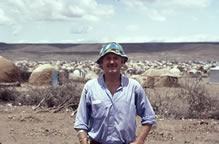
Medical Director, Las Dhure Refugee Camp,
Somalia, 1980-1981
Lived in San Ygnacio, Texas, 1981-1992, making and exhibiting his art and working as the Southern Region Refugee Coordinator for Amnesty International USA
Returned to the Practice of Medicine in 1992 as the Consultation-Liaison HIV Psychiatrist at The University of Texas Medical Branch in Galveston and joined the faculty at The Institute for the Medical Humanities at UTMB
Lived in Galveston, Texas 1992-2013
Retired (August 31, 2012) as Clinical Associate Professor of Psychiatry and Behavioral Sciences and Member of The Institute for the Medical Humanities at The
University of Texas Medical Branch, Galveston, Texas
Currently, remains Emeritus Associate Professor, The Institute for Bioethics & Health Humanities, UTMB, Galveston, Texas.
For the 2019 Spring semester at East Tennessee State University, he was The Basler Chair of Excellence for the Integration of the Arts, Rhetoric and Science.
In 2019, after 6 years in New Hope, Pennsylvania he moved back to San Ygnacio, Texas, two blocks from the Rio Grande, 30 miles down the Border from Laredo, Texas. He continues to make art and develop art medicine projects.
Listen to Nicole Bearden’s Critical Bounds” 10/22/20 podcast conversation with Eric Avery “On Art and Health” (70 minutes)
For forty years he has worked at the intersection of visual art and medicine. His social content prints explore issues such as human
rights abuses, and social responses to disease (HIV and Emerging
Infectious Diseases), death, sexuality and
the body. In clinical art spaces set up in art museums and galleries, his art
medicine actions have explored the liminal space between art and medicine. From 1992-2012, at the IMH in Galveston, he made prints, paper and art actions that reflected his clinical work with HIV/AIDS.
He has had numerous solo exhibitions in the United States and his prints are in many collections including: Smith College Art Museum, Baltimore Art Museum, the Fogg
Art Museum at Harvard University, Firestone Library at Princeton University, The
Library of Congress, ARS MEDICA collection Philadelphia Museum of Art, Pennsylvania Academy of Fine Art, Philadelphia, Smithsonian American Art Museum, Washington, DC, Blanton Museum of Art, Austin Texas, Modern Art Museum of Fort Worth, Fort Worth, Texas, The Boston Museum of Art, The National Library of Medicine, The Cushing/Whitney Medical Library at Yale University School of Medicine, Watson Library The Metropolitan Museum of Art, and the National Gallery of Art. In England, his work is included in The British Museum and The Wellcome Trust Library for the History and Understanding of Medicine. |
| |
Selected Projects 2013 to Present
Smith College Museum of Art-"The Art of Healing is a Sacred Art": The Prints of Dr. Eric Avery (Blog Post 2013)
Smith College Museum of Art Acquisition - Paper+People (Blog Post 2014)
Princeton University Firestone Library (Blog Post 2014)
Art AIDS America (Exhibition 2015)
The American Dream: From Pop to the Present (Exhibition 2017)
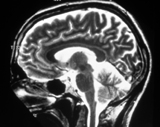
Print Life Neurogenesis (Print 2017)
Epidemic York College (Exhibition 2018)
Epidemic ETSU (Exhibition 2019)
Eric Avery: Doctor of Printmaking (Blog Post 2019)
Wayne G Basler Chair of Excellence for the Integration of the Arts, Rhetoric and Science, Spring Semester 2019 East Tennessee State University, Johnson City, Tennessee
Eric Avery: Paradise Arrives (Blog Post 2019) |
|
-
Sue Coe, artist and author/illustrator
www.graphicwitness.org
I
first met Dr. Eric Avery through a letter from Somalia. He was
working as a doctor in a refugee camp with thousands of human beings
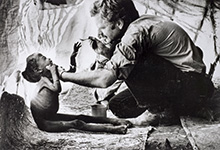
who were starving to death. A photograph in Life magazine shows
Eric in the middle of the camp that stretched for miles, a figure
at dusk holding up a tiny baby into the light, silhouetted by dusty
tents. It was there that Eric started to make woodcuts—to
record the terrible sights he had seen and, as his scalpel
cut into the wood, as therapy. If you are fortunate enough to be a friend of Eric’s,
you will receive woodcut cards of plants and birds, shells and
trees,
as purely and simply illustrated as engravings by the 19th-century
British naturalist Thomas Bewick. That would be sufficient for
most artists, but for Eric, harsh truth is as urgently beautiful.
Eric uses science and art in tandem to heal. He transmutes the
chaff of suffering into art. Eric always says “life before
art” as he plunges into healing the victims of society wherever
he finds them—in crack houses, on death row—refugees
on the broken borders of life or death, the poor, the abandoned.
They become alive in his art; their content creates his form.
His work as an artist/psychiatrist treating patients with HIV
has become a document of historical record and is as sophisticated
and powerful as any Dürer woodcut. It is the antibody to our
disease of distance. Dominant culture flattens all experience,
rendering reality into irony. We no longer trust ourselves to experience
life directly. Eric makes art in the tradition of reportage; there
is a direct emotional involvement with his subjects, a witnessing
that is devoid of sentiment. The humility of small woodcuts depicting
faces of cherished patients, printed on paper that is made from
hospital sheets or the clothing of AIDS orphans, subverts and unravels
the dominant social ideology of power and superiority.
Read
about Eric Avery? Political
Prints and Paper Making
Text by Eric Avery with illustrations Hand Papermaking, Summer 2004
|
| |
|
Current
Employment:
Self Employed Visual Artist
Address:
ericnelsonavery@yahoo.com
PO Box 250
San Ygnacio, Texas 78067
Education:
Undergraduate
- 1966-1970
University of Arizona
Tucson, Arizona
Degree: Bachelors of Art in Art
Medical
School - 1970-1974
The University
of Texas Medical Branch
School of Medicine
Galveston, Texas
Degree: M.D.
Internship - 1974-1975
The University of Texas Medical
Branch
Department of Psychiatry and Behavioral Sciences
Galveston, Texas
Residency
- 1975-1978
Adult Psychiatry Residency Training Program
Columbia-Presbyterian Medical Center
New York State Psychiatric Institute
Department of Psychiatry
New York City, New York
Fellowship
- 1992-1994
Consultation-Liaison Psychiatry (HIV/AIDS)
Department of Psychiatry and Behavioral Sciences
The University of Texas Medical
Branch
Galveston, Texas
Professional Activities:
Medicine
Clinical
Staff Psychiatrist (1992 - 2012)
AIDS Clinical Care and Research Program Out-Patient Clinic
The University of
Texas Medical Branch, Galveston, Texas
Consultant
Psychiatrist (1998 - 2012)
HIV & General Consultant Psychiatry
The University of
Texas Medical Branch, Galveston, Texas
Professional Activities: Art Medicine
Exhibitions
Art Actions
Printed Matter
|
|
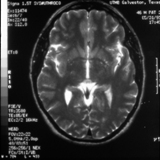 |
| 1997-Avery Brain |
| - |
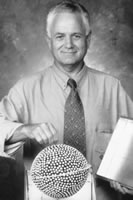 |
1993-HIV Condom
Filled Pinata
Photo: S. Nussenblat |
| - |
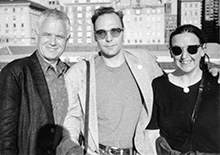 |
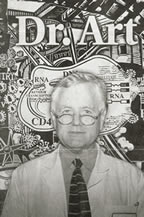
| 1997-Eric Avery, David Paar, Sue Coe, NYC |
| |
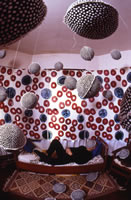 |
1996-The Stuff
of Life
Photo: J. Glowczwski |
| - |
 |
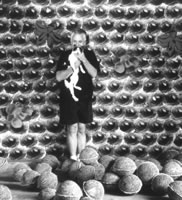
1997-Fogg Art Museum
Harvard University
Cambridge, Massachusetts
Photo: Harvard Crimson |
| - |
 |
| Photo:
J. Glowczwski |
| - |
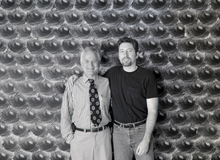 |
1997-Eric Avery, William Marshall- Studio Assistant
Stuff of Life
Because We Are |
| |
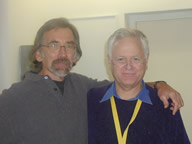 |
| 2003-Bill Lagatutta, Master Printer Tamarind Institute, and Eric Avery
at 3rd Impact
Print Conference, Cape Town, South Africa |
| |
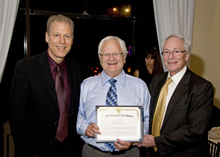 |
2012-Medical Student Teaching Award. Dwight Wolf MD, Eric Avery MD, Robert Hirschfeld MD, Chairman of Psychiatry and Behavioral Sciences.
Photo:
M. Kinonen |
| |
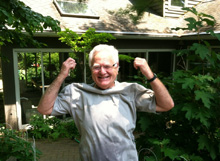 |
2014-New Hope, Pennsylvania
Photo: Daniel Heyman
|
| |
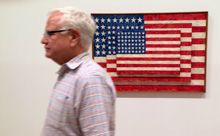 |
2015-Whitney Museum of Art
Photo: Roger Haile |
| |
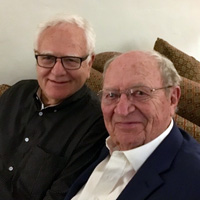 |
| 2018-Eric Avery and printmaking mentor Andrew Rush in Tucson, Arizona |
| |
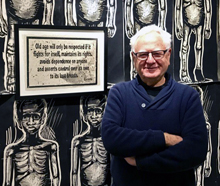 |
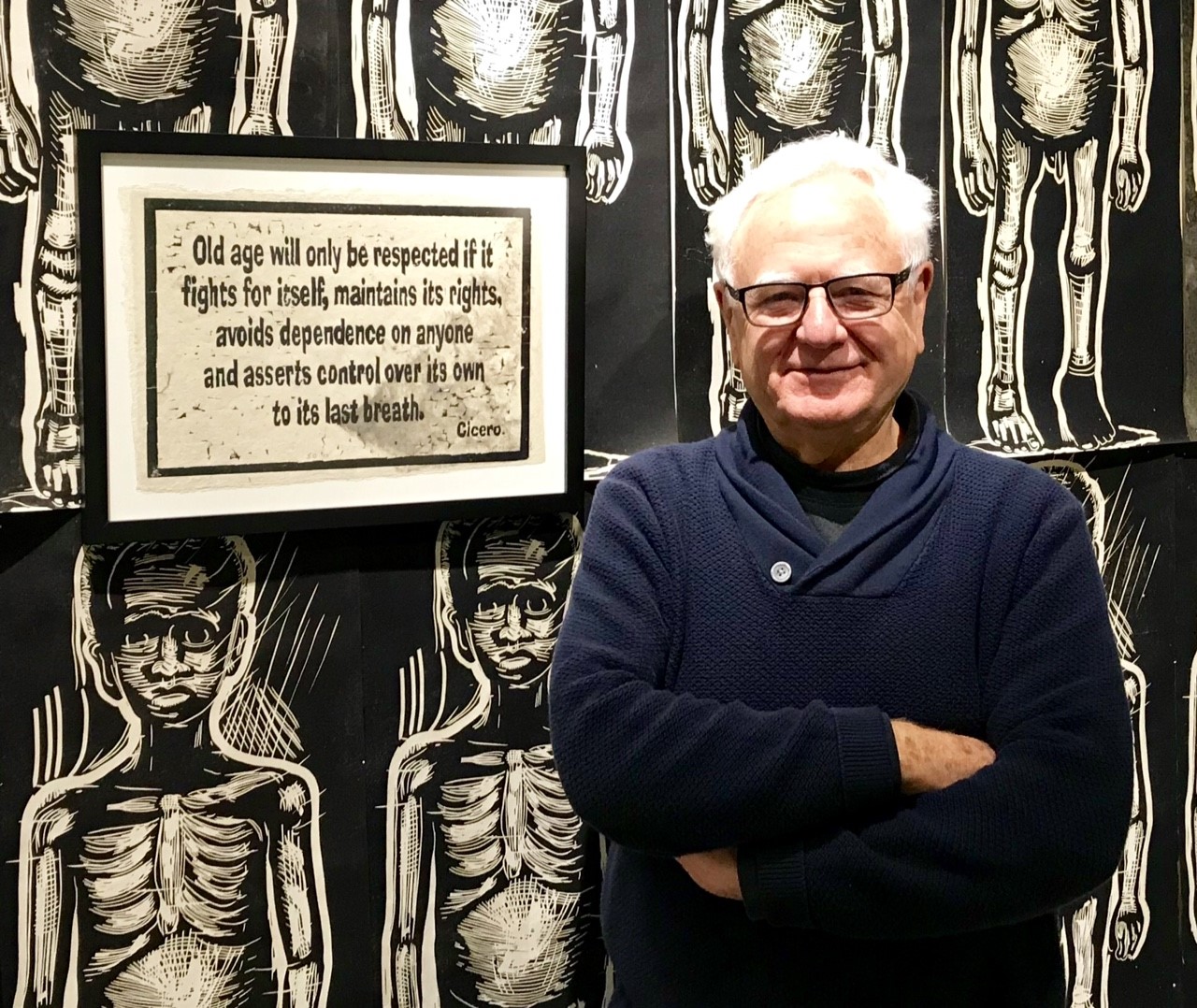
2018-Resist Ageism
Photo: Jill Schoeniger |
| |
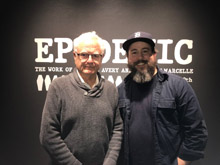 |
2018-Eric Avery and Adam DelMarcelle Epidemic exhibit York College, York Pennsylvania
Photo: Marissa Grate |
| |
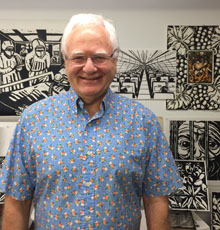 |
2019-Basler Chair for the Intergration, Rhetoric of Art and Science
East Tennessee State University
Johnson City, TN
Epidemic
Photo credit: Dave DiMarchi |
| |
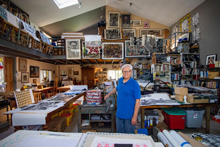 |
Eric Avery 2020 San Ygnacio studio
Photo: Charlie Warden
|
| |
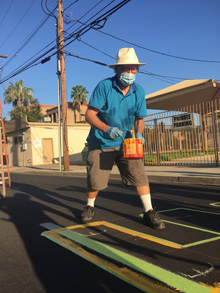 |
| August 2020. Painting Laredo, Texas No Border Wall street mural. |
| |
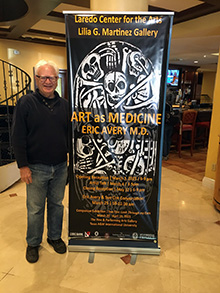 |
| March 2023. Ways of Seeing Laredo, Texas |
| |
|